

Positive Reinforcement Crate Training: A Step-by-Step Guide
Crate Training by Teaching Comfort, Not Confinement

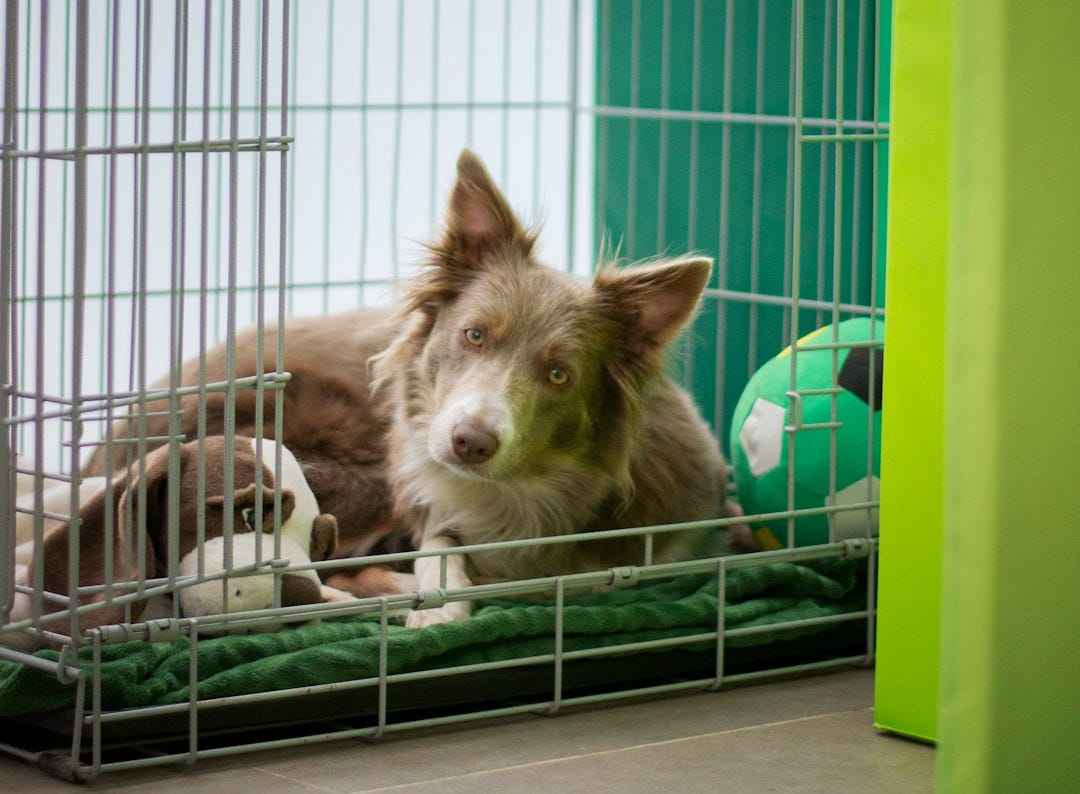
Let’s talk crate training…it can be a hot topic. The end all, be all is this: it’s up to each dog owner whether they crate train or not. Some people see crates as a bad thing, and they can be. Others see them as a good thing, and they can be that too. It all falls on the owner in how they treat the dog and use the crate.
Personally, I used to hate crates because I thought it was cruel to cage an animal. It removed their freedom and I considered it to be a form of abuse (in certain situations). But, in early 2020, we had a large earthquake where I lived and it made me reframe my thought process. I realized there very well could be an event or a time that my dog wouldn’t have a choice other than to be in a crate. If something were to happen and I couldn’t get to her, rescues would step in, and she would be in a crate. So for her safety and comfort, I decide to train her to be comfortable in one for emergency purposes.
Ever since that event, I advocate for crate training as long as it’s done with positive reinforcement and as long as the owner doesn’t use the crate as punishment and/or abuse the crate. There are many good things about crates and crate training including emergency comfort, training, resting and more.
So, how do you train your dog to be comfortable in a crate? Let’s dive in.
